


Windsurfing gear is an investment, and taking proper care of your equipment ensures its longevity and performance. Improper transportation and storage can lead to damage, reducing the lifespan of your board, sail, and accessories. Whether you’re driving to your favorite windsurfing spot or storing your gear during the off-season, following best practices will keep your equipment in top shape.
Transporting Your Windsurfing Gear Safely
1. Use a Padded Board Bag
A quality board bag with padding helps protect your windsurfing board from dings and scratches during transport. Look for bags with UV-resistant materials to shield your board from sun damage.
2. Secure Your Gear Properly on a Roof Rack
If transporting your board on a car roof rack, use padded crossbars and high-quality tie-down straps to prevent movement. Secure the board with the deck facing down to reduce wind resistance and potential damage.
3. Protect Your Sail and Mast
Rolling your sail rather than folding it prevents creases and weak spots. Store the sail in a protective bag and place it inside the car or a roof-mounted cargo box. The mast should also be kept in a padded sleeve to avoid cracks.
4. Keep Fins and Accessories in a Separate Bag
Small items like fins, harnesses, and foot straps can get lost or damaged if left loose. Use a dedicated gear bag to keep everything organized and prevent scratches on your board.
5. Avoid Excessive Heat and Sun Exposure
Leaving your windsurfing gear in a hot car or exposed to direct sunlight for long periods can weaken the materials. If possible, park in shaded areas or cover your gear with a reflective tarp.
Proper Storage for Windsurfing Equipment
1. Rinse Everything with Fresh Water
Saltwater and sand can degrade your gear over time. Always rinse your board, sail, mast, and other accessories with fresh water after each session to prevent corrosion and wear.
2. Dry Everything Before Storing
Moisture can cause mold and mildew, especially on sails and foot straps. Make sure all gear is completely dry before putting it away. Hang sails in a well-ventilated area to air-dry.
3. Store Your Board on a Rack or Padded Surface
Avoid storing your board directly on the ground, as it can develop pressure dings. Use a board rack or place it on padded supports in a cool, dry space.
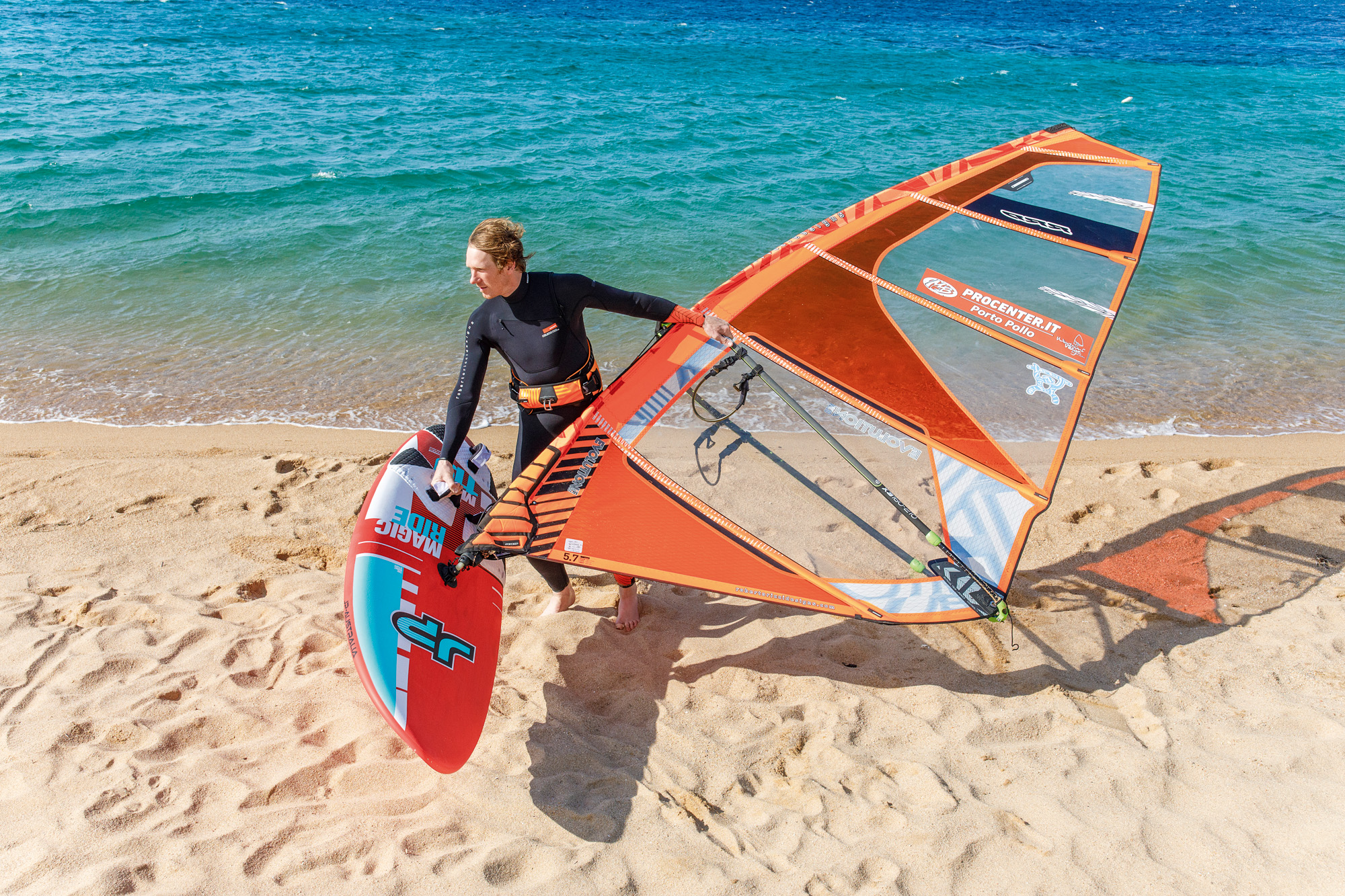
4. Keep Your Sail Rolled Up in a Dry Area
Sails should be stored loosely rolled rather than tightly folded to avoid permanent creases. A climate-controlled garage or storage room is ideal.
5. Remove and Store Fins Separately
Fins can be easily damaged if left attached. Remove them after each session and store them in a padded case or gear bag to prevent warping.
6. Protect Your Mast and Boom
Lay masts flat or store them upright in a protective case. The boom should be kept in a dry place with padding to prevent dents or bending.
7. Regularly Check for Wear and Tear
Inspect your gear for any signs of damage, such as cracks in the board, tears in the sail, or frayed ropes. Address minor repairs immediately to prevent further damage.
Conclusion
Taking the time to properly transport and store your windsurfing gear ensures its longevity and performance. Use protective bags, secure your gear during transport, and store it in a dry, shaded area when not in use. Regular maintenance and proper handling will keep your windsurfing equipment in excellent condition, allowing you to enjoy smooth and exciting sessions on the water for years to come.


